
Don’t Let Your Equipment Call the Shots
A Molten Metal Maintenance Strategy
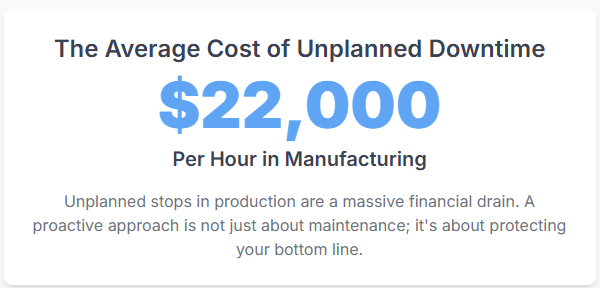
This sign hits close to home in the secondary aluminum industry. In the harsh environment of a melt furnace, where equipment endures extreme temperatures, corrosive flux, and abrasive dross, a “run-to-failure” approach is a recipe for disaster. An unexpected pump failure or a compromised furnace lining doesn’t just mean a few hours of lost production; it means emergency repairs, potential safety incidents, and a cascade of delays that affect your entire operation.
At High Temperature Systems, we see the difference every day between plants that control their equipment and plants that are controlled by it. The key is a proactive maintenance strategy built on three pillars: intelligent scheduling, strategic budgeting, and smart inventory management.

Most Common Excuses and Justifications for Delaying Maintenance
Production & Financial Pressures
“We can’t afford the downtime.” The most frequent excuse. A specific, high-value order is due, and taking the furnace or casting line down is seen as a direct hit to revenue. “We’ll kill our numbers for the quarter.” Production metrics are king, and a scheduled PM shutdown is a planned hit to those metrics that management wants to avoid. “Let’s just push through this one last run.” The “just one more” fallacy, where a delay is framed as temporary but often becomes permanent as new “last runs” appear. “We don’t have it in the budget.” The maintenance budget has been exhausted by earlier unplanned breakdowns, leaving no funds for proactive work.
Parts, Skills, Manpower & Logistics
“The parts are on back order.” A supply chain issue where critical components (e.g., pump shafts, thermocouples, special filters, crucible) haven’t arrived. “We thought we had the spare in inventory, but we don’t.” Poor inventory management or failure to reorder a part after the last spare was used for an emergency. “Production changed the schedule on us at the last minute.” A lack of communication or coordination between the production and maintenance departments. “Getting the furnace cooled down and prepped takes too long.” The logistical complexity and time required for the prep work makes it difficult to fit into any available window. “The crew is swamped putting out fires.” The maintenance team is so busy with reactive, emergency repairs that they have no time for scheduled, proactive work.
Cultural & Mindset Issues
“If it ain’t broke, don’t fix it.” The classic reactive maintenance mindset, ignoring the “preventative” aspect entirely. “It’s been running fine for years.” Complacency and a belief that past performance guarantees future reliability. “That vibration/noise/leak is normal for that old machine.” The “normalization of deviance,” where clear warning signs of failure are accepted as standard operation. “We’ll just keep a close eye on it.” A non-committal response that delays action without a firm plan, often until the equipment fails. “We did a major rebuild 18 months ago, it can go a bit longer.” Overconfidence in previous work, leading to an extension of service intervals beyond recommended limits.
From Reactive Repairs to Proactive Reliability

The foundation of a world-class maintenance program is shifting your focus from fixing what’s broken to preventing it from breaking in the first place. This means implementing robust Preventive and Predictive Maintenance schedules for your most critical assets: your furnaces and molten metal pumps.
Preventive Maintenance (PM): Your First Line of Defense
PM involves routine, scheduled tasks that are the lifeblood of equipment longevity. For your molten metal circulation and transfer pumps, a rigorous PM schedule is non-negotiable.
Daily Checks:
Listen for unusual noises from the motor or bearings.
Visually inspect the pump post/riser for significant dross buildup or cracking.
Check motor amperage; a significant increase can indicate a blockage or failing bearings.
Clean dross and buildup from the pump base and accessible areas of the post.
Weekly Checks:
Inspect all pump mounting hardware and refractory for integrity. A loose pump is an unsafe and inefficient pump.
Verify thermocouple readings and controller performance.
During Alloy/Furnace Changes:
Perform a thorough inspection of the pump’s graphite or ceramic components (shaft, post, impeller) for erosion, cracks, or mechanical damage. This is the ideal time to identify wear before it leads to failure.
Predictive Maintenance (PdM): Using Data to Prevent Failure
Predictive maintenance uses technology to monitor equipment health and forecast issues. It’s about spotting trouble before it brings production to a halt.
Thermal Imaging: Use an IR camera to scan your furnace walls for refractory hot spots, which can indicate thinning lining. Also, use it to spot overheating electrical connections on pump motors and control panels.
Performance Trending: Track your pump’s flow rate or circulation effectiveness over time. A gradual decrease in performance, when all other variables are constant, often points to impeller wear and can help you schedule a rebuild before the pump fails entirely.
Budgeting for Total Cost of Ownership (TCO)
Your maintenance budget isn’t just an expense; it’s an investment in uptime. When evaluating equipment, looking beyond the initial purchase price is critical. A cheaper pump that requires a rebuild every six months will cost you far more in parts, labor, and lost production than a robustly engineered pump designed for longevity.
Your budget should be built around the Total Cost of Ownership (TCO) and include:
High-Quality Spares: Budgeting for OEM-spec parts, like properly formulated graphite shafts and impellers, ensures reliability. Inferior materials often fail prematurely, wiping out any initial savings.
Labor (Internal & External): Account for your team’s time as well as specialized contractors for major jobs like a furnace reline.
Rebuild Programs: Proactively schedule pump rebuilds as part of your budget. This is far more cost-effective than running a pump to destruction and incurring the cost of a full replacement and the associated emergency downtime.
Modernization & Upgrades: Earmark funds for upgrading older equipment to more efficient, reliable models that can reduce energy consumption and extend maintenance intervals.
Smart Inventory: Critical Spares for Molten Metal Operations
When a transfer pump goes down, waiting days for a replacement part is not an option. Smart inventory management ensures you have the right components on hand without tying up excessive capital.
Focus on the critical spares for your specific HTS pumps:
Graphite/Ceramic Components: A complete set of wear parts, including a spare shaft and impeller, is essential. These are the components most exposed to the harsh melt environment.
Couplings: Keep shaft couplings in stock. These are relatively low-cost items that can shut down your entire operation.
Complete Rebuild Kits: Work with us to create kits for standard pump rebuilds, including all necessary gaskets, fasteners, and wear items. This saves valuable time during a planned shutdown.
A “Hot Spare”: For truly critical applications, the ultimate insurance is a fully assembled, ready-to-go spare pump. The cost is easily justified by eliminating hours—or days—of lost production.
Your equipment will always need attention. By implementing a proactive strategy, you decide when and how that attention is given. You trade unplanned chaos for scheduled control. Contact High Temperature Systems today to discuss a maintenance and spares strategy that puts you back in charge of your schedule.
